
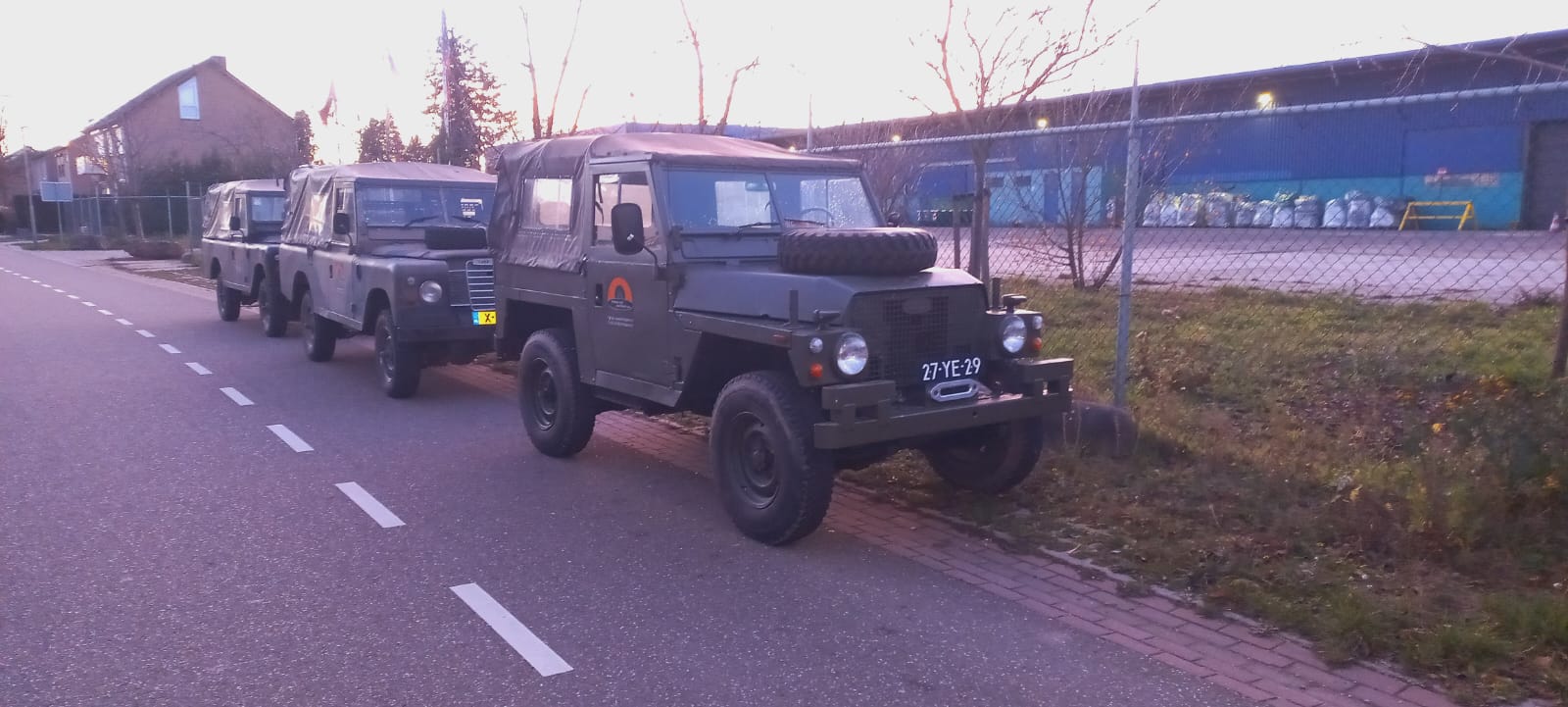
1973 Land Rover Lightweight
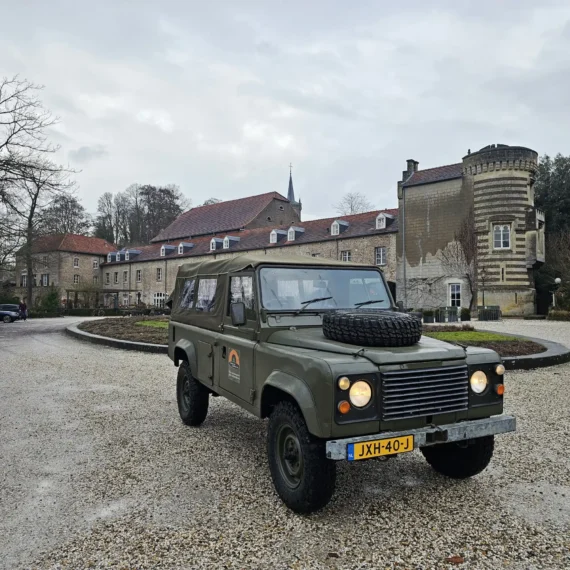
The Land Rover Lightweight 1/2 Ton is a British military vehicle supplied by Land Rover. The vehicle was designed to be transported by a Westland Wessex helicopter. This medium transport helicopter was in service with the British Armed Forces for over forty years. The Lightweight was produced from 1968 to 1984 and was used by various armed forces and later also by private owners.
In the early 1960s, the Royal Marines and the British Army were looking for an air transportable vehicle to replace the Austin Champ. The smallest available Land Rover, a Series IIA with a wheelbase of 88 inches, was too heavy for this purpose. Land Rover therefore began developing a lighter version in 1965.
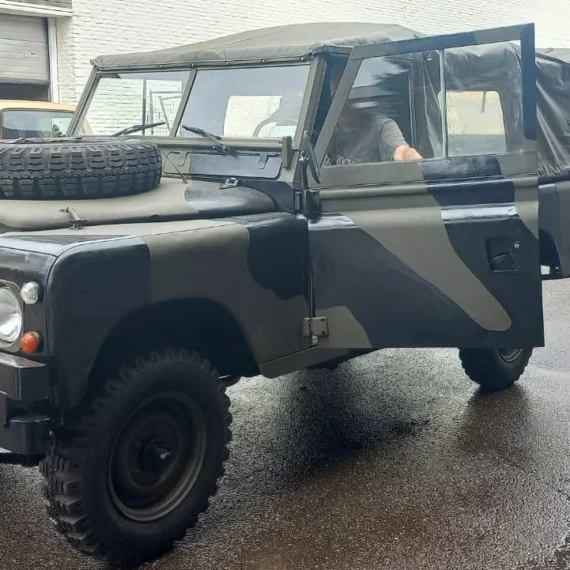
Many body parts were made detachable, and non-essential components were eliminated. For transport by helicopter, the roof with the canvas bars, the upper body sections, the doors, and the windshield, among other items, could be removed. Furthermore, the vehicle was made approximately ten centimeters narrower through modified axles and shorter drive shafts. As a result, it fit on a standard transport pallet.
The name Lightweight is somewhat misleading: when fully assembled, the military vehicle was no lighter than a standard Land Rover 88 due to the extra reinforcements. However, with the detachable body panels removed, the weight did remain below the lifting limit of the time. In practice, the vehicles were primarily transported by cargo plane or train; transport under a helicopter was rare.
The first production models were built on November 11, 1968. Production continued until 1984.